Pasta peperonata
With red and yellow peppers
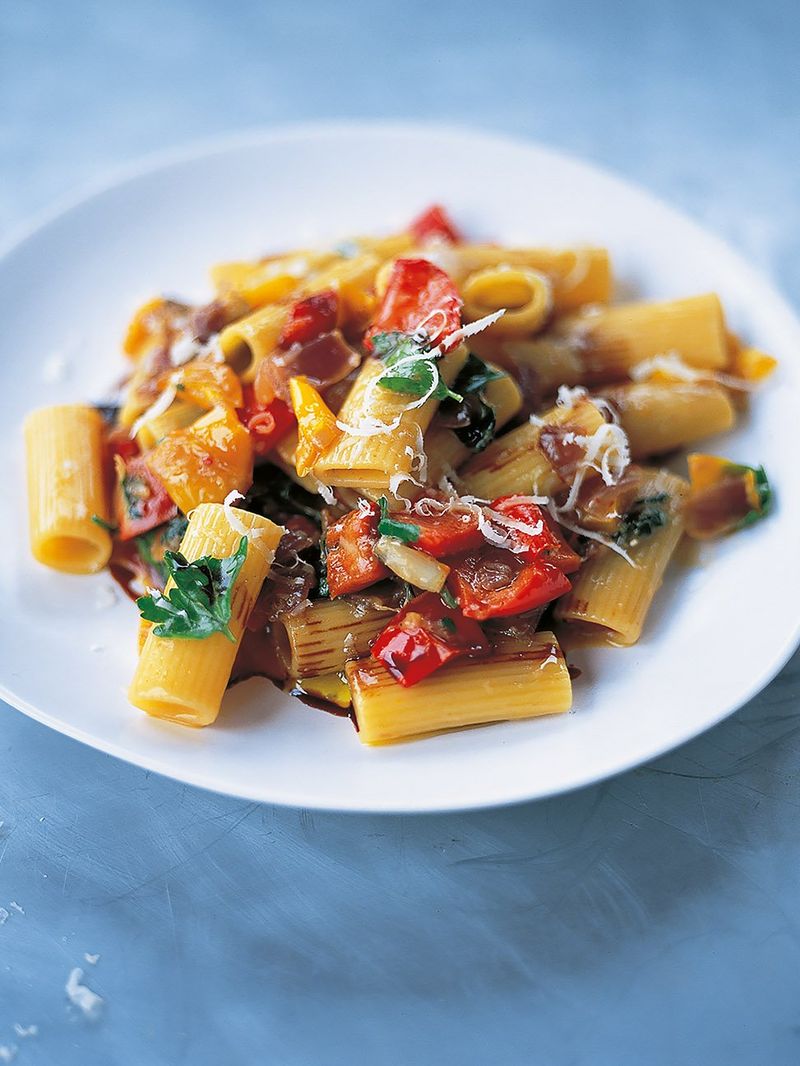
Pasta peperonata
With red and yellow peppers
“Chunky rigatoni pasta is great for catching the lovely flavours of the peppers and mascarpone ”
Serves 4
Cooks In1 hour
DifficultySuper easy
Nutrition per serving
-
Calories 604 30%
-
Fat 14.0g 20%
-
Saturates 4.2g 21%
-
Sugars 16.4 g 0%
-
Protein 23.4g 47%
-
Carbs 92.0g 35%
Of an adult's reference intake
Tap For Method
Ingredients
- 2 red peppers
- 2 yellow peppers
- extra virgin olive oil
- 2 red onions
- 2 cloves of garlic
- 2 handfuls of fresh flat-leaf parsley
- 2 tablespoons red wine vinegar or balsamic vinegar
- 2 handfuls of Parmesan cheese
- 2 heaped tablespoons mascarpone cheese or crème fraîche , optional
- 455 g rigatoni, penne or spaghetti
Tap For Method
The cost per serving below is generated by Whisk.com and is based on costs in individual supermarkets. For more information about how we calculate costs per serving read our FAQS
Tap For Ingredients
Method
- Deseed and slice the peppers and put them in a large frying pan over a medium heat with a little olive oil and a pinch of sea salt and black pepper. Place a lid on, and cook slowly for 15 minutes until softened. Don't rush this too much, as cooking the peppers slowly like this really helps to bring out the flavour.
- While the peppers are cooking, peel and finely slice the onion, and peel and grate the garlic. Finely chop the parsley leaves and reserve the stalks.
- Add the onion to the pan and cook for a further 20 minutes. Then add the garlic and parsley stalks and toss around, keeping everything moving in the pan. Cook for about 3 minutes most. Have a little taste, and season with a bit more salt and pepper. Add the vinegar – it will sizzle away, so give everything a good toss.
- Grate the Parmesan and add one handful of the Parmesan and the mascarpone or crème fraîche, if using, and turn the heat down to minimum while you cook the pasta.
- Meanwhile, put a large pot of salted water on to boil. Add the pasta to the boiling water and cook according to the packet instructions. When cooked, drain in a colander, reserving some of the cooking water.
- Put the peppers, pasta and parsley leaves into a large warmed bowl. Give them a good toss together, then add a little of the pasta cooking water and a few good lugs of extra virgin olive oil to coat the pasta nicely. Serve straight away sprinkled with the rest of the Parmesan.
Related recipe
Related video
© 2024 Jamie Oliver Enterprises Limited
© 2024 Jamie Oliver Enterprises Limited