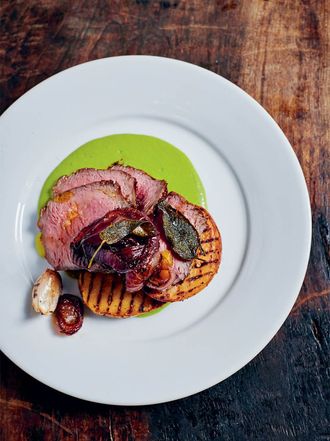
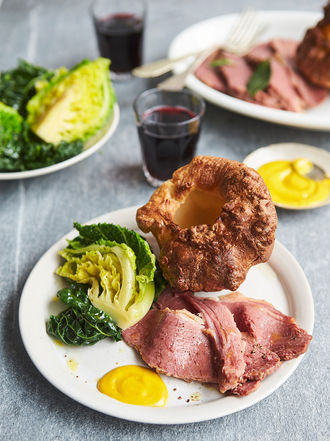
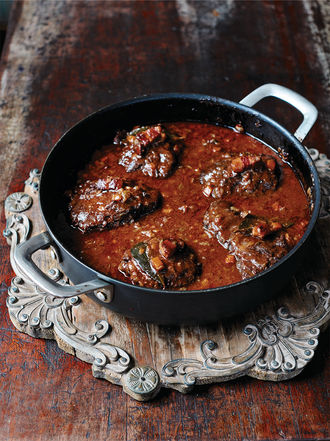
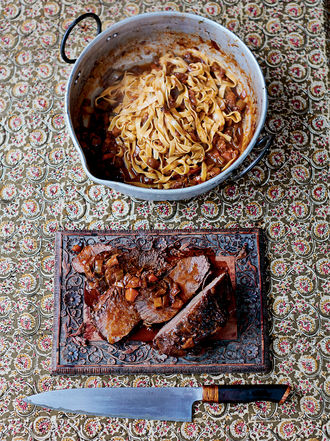
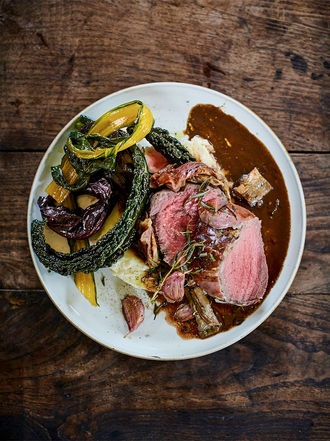
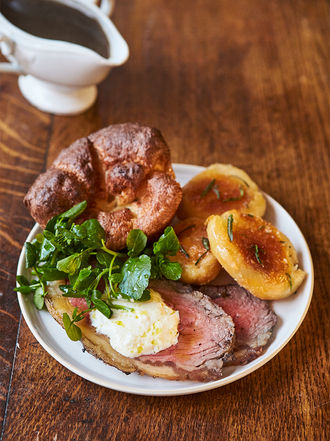
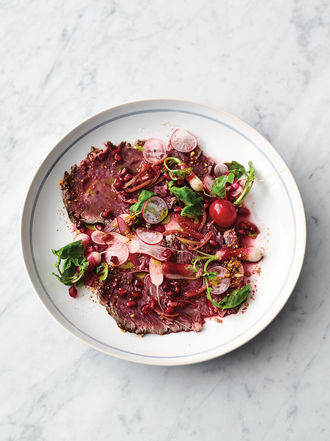
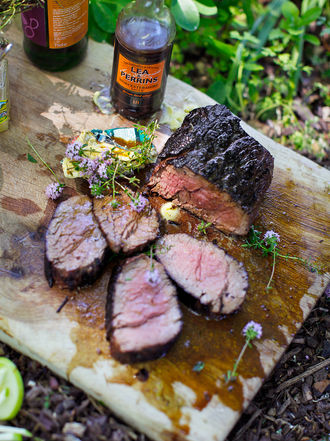
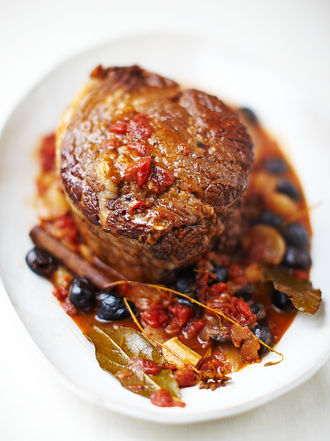
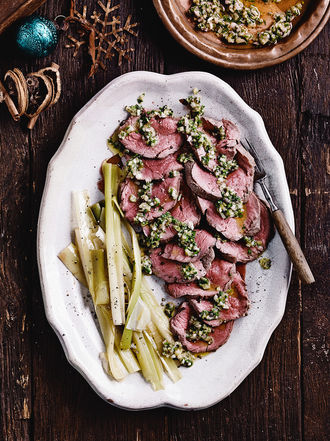
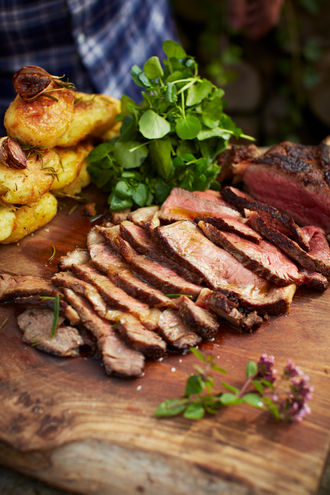
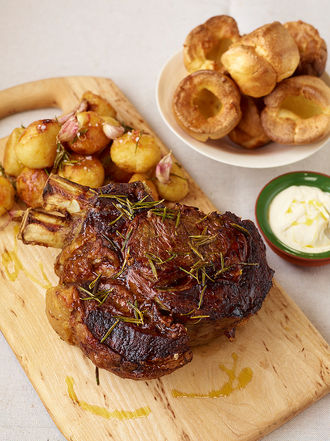
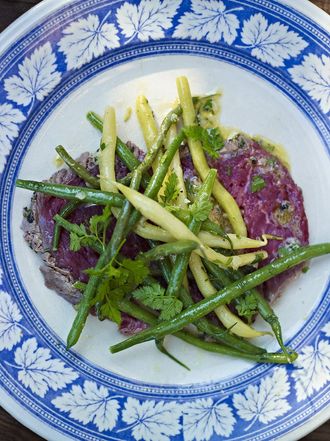
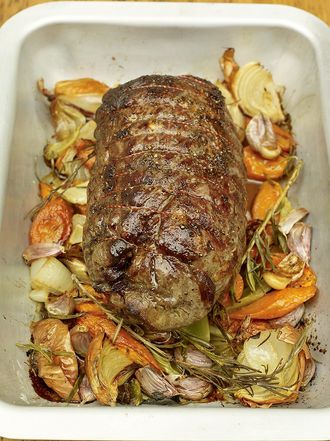
This fore rib cut of beef makes the perfect roast. Even if there are fewer than ten of you it's still worth cooking the whole joint and enjoying the leftovers. Beef and beetroot work so well together. When buying beetroot, try and get hold of some different shapes and colours.

Roast fore rib of beef with beetroot & horseradish
Nutritional Information - Amount per serving:
- Calories 630kcal
- Carbs 17.5g
- Sugar 15.4g
- Fat 34.2g
- Saturates 15.0g
- Protein 59.2g
This recipe is adapted from:
Cook with Jamie
Method
Preheat your oven to 200ºC/400ºF/gas 6. Wash and scrub the beetroots thoroughly to remove any dirt or grit, place in a pan of cold salted water and bring to the boil, then simmer for about 50 minutes. Meanwhile, put all the marinade ingredients and a few generous pinches of salt in a pestle and mortar or Flavour Shaker, bash them up, add a couple of lugs of olive oil and rub all over your beef joint. Put the joint on a large roasting tray and into the preheated oven for an hour.
When your beetroot is almost cooked, drain and peel while still warm, then cut each one in half and toss all the pieces in a bowl with the garlic, thyme sprigs, balsamic vinegar and a few lugs of olive oil. After its hour is up, remove the beef from the oven and scatter the beetroot halves all around the meat in the tray. Place the tray back in the oven and cook for a further 30 minutes, by which time the beef should be medium and the beetroot perfectly roasted (feel free to cook the meat to your liking, though). Allow the meat to rest for up to 20 minutes – you may need to keep the beetroot warm in a low oven.
Chop the marjoram or parsley leaves and mix with the crème fraîche and lemon juice. Spike well with the horseradish and season to taste. Carve the beef on to a large platter with the resting juices. Serve with the roast beetroots, flavoured crème fraîche and some lovely roast potatoes.
Matt's wine suggestion: Australian red – Shiraz
BUYING SUSTAINABLY SOURCED FISH
Buying sustainably sourced fish means buying fish that has been caught without endangering the levels of fish stocks and with the protection of the environment in mind. Wild fish caught in areas where stocks are plentiful are sustainably sourced, as are farmed fish that are reared on farms proven to cause no harm to surrounding seas and shores.
When buying either wild or farmed fish, ask whether it is sustainably sourced. If you're unable to obtain this information, don't be afraid to shop elsewhere – only by shopping sustainably can we be sure that the fantastic selection of fish we enjoy today will be around for future generations.
For further information about sustainably sourced fish, please refer to the useful links below:
Marine Stewardship Council
http://www.msc.org/
Fish Online
http://www.fishonline.org
Top keyword searches
Popular recipes this week
Popular recipe categories
Join the club
Create and save recipes
Chat in our forums
Ask Jamie your questions
Receive our weekly newsletter
Special offers and promotions
Plus £60 Naked wines voucher